Programs
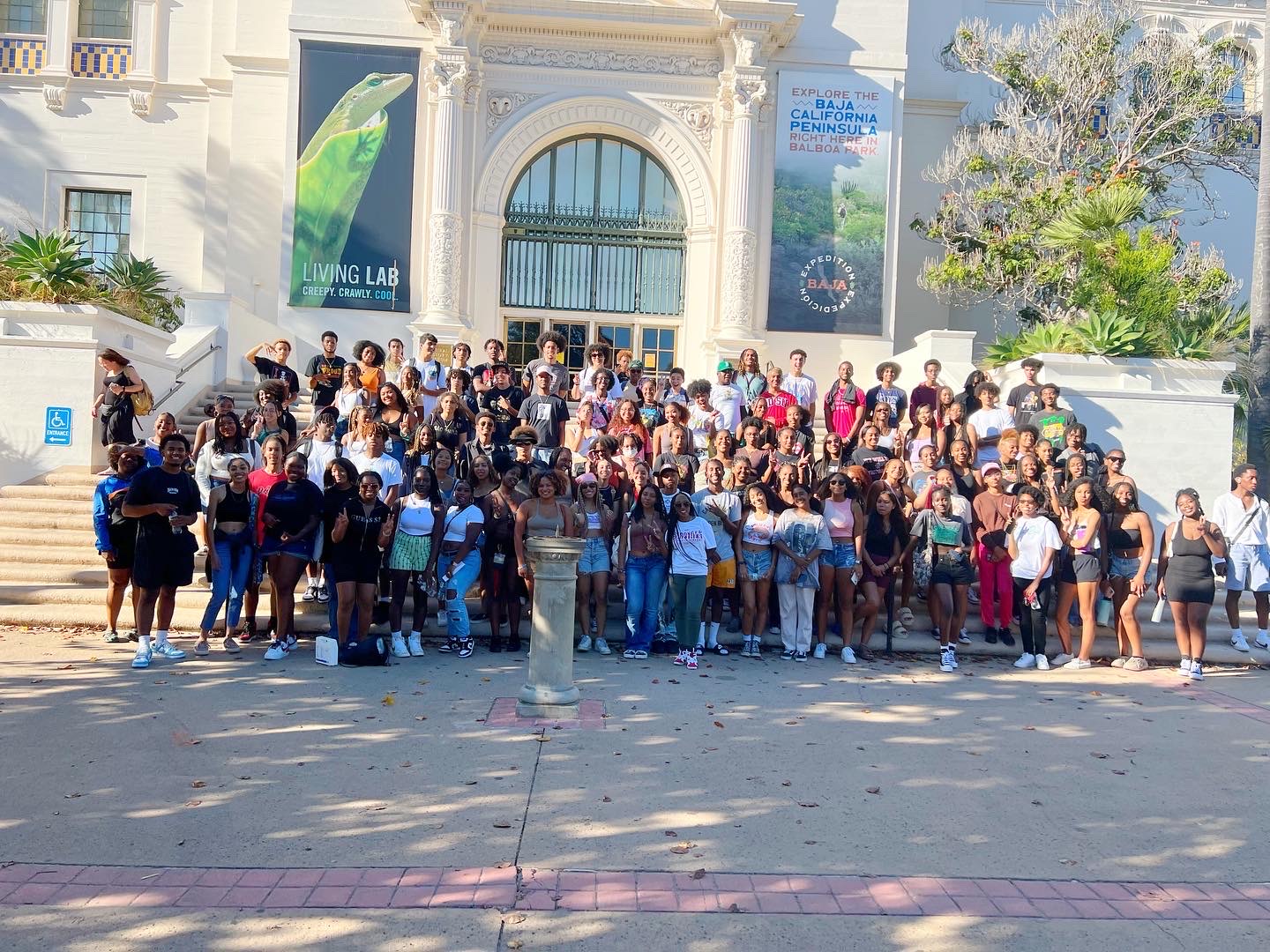
All of our programs are intentionally based on one or more of the Gus & Emma Thompson Black Resource Center's key areas of Community Building, Academic Achievement, Career Development, Health & Wellness, Leadership & Service, and Social Justice. Below are a few of our signature programs, which are executed on a semesterly or annual basis.
Juneteenth
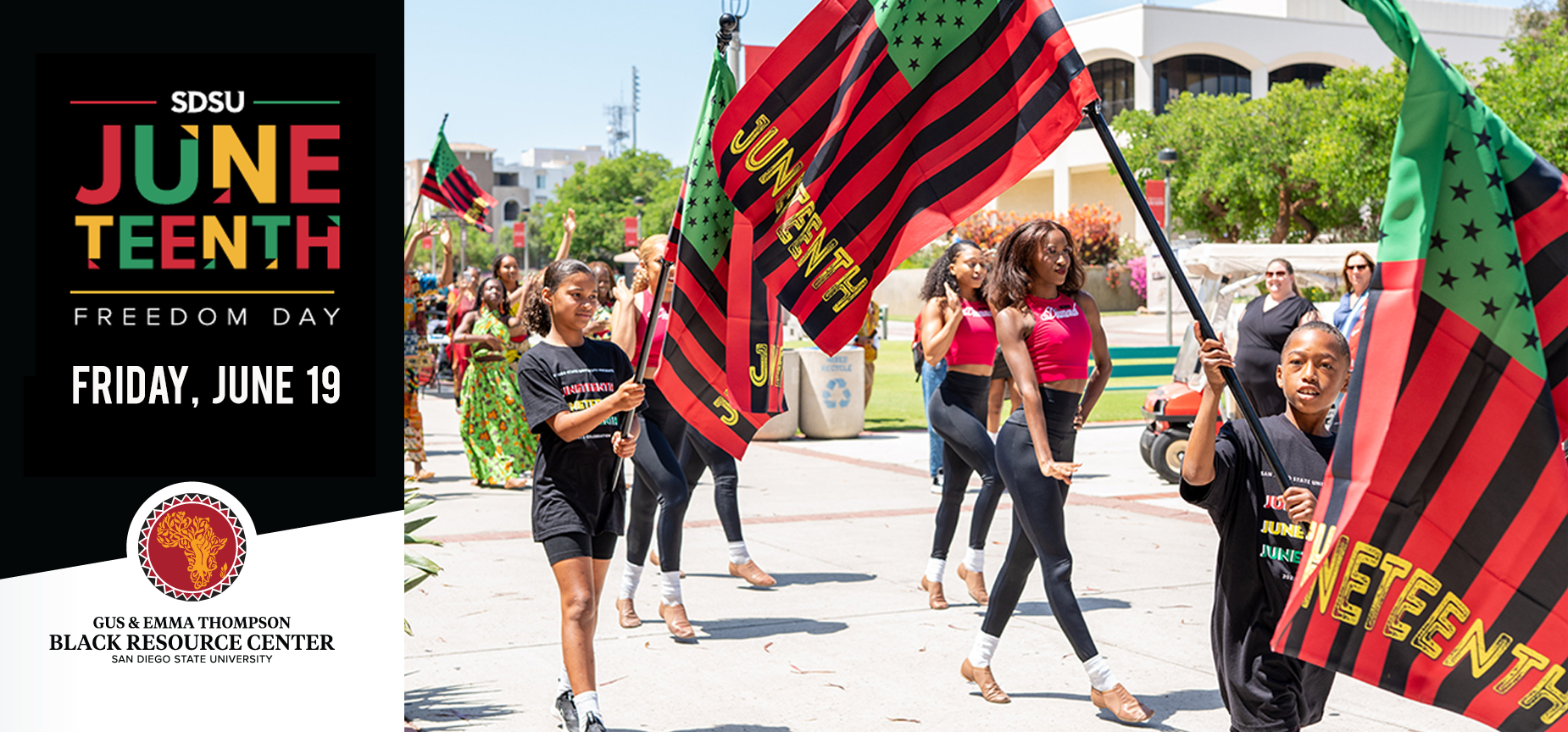
This year, as in many previous years in San Diego County, there are celebrations from Oceanside to downtown San Diego planned for Juneteenth weekend.
Observing Juneteenth
SDSU and SDSU Imperial Valley will be closed in observance of Juneteenth, both a federal and California state holiday, on June 19.
In 2021, President Joe Biden signed the Juneteenth National Independence Day Act, making Juneteenth a federal holiday. This historic legislation was a significant step in acknowledging the importance of this day nationwide.
On June 17, 2023 Newsom issued his proclamation establishing June 19 as “Juneteenth National Freedom Day: A Day of Observance.”
Various cities and communities across the country have celebrated Juneteenth since the 19th century and more recently, especially with the resurgence of the remembrances in the late 1960s during the Black Power and Civil Rights eras. Additional holiday remembrances have grown exponentially across the country in recent years.
What does Juneteenth mean to you?
Message from the Vice President for Student Affairs and Campus Diversity
Dear SDSU Community,
On June 19, we commemorate Juneteenth, a day of profound historical significance in
the United States. Juneteenth marks the date in 1865 when Union troops arrived in
Galveston, Texas, to announce the freedom of more than 250,000 enslaved African Americans
(more than two years after the Emancipation Proclamation had been issued).
Although President Lincoln signed the Emancipation Proclamation on January 1, 1863,
the enforcement of emancipation depended upon the advance of Union forces throughout
the Confederacy. In many parts of the South, enslaved individuals remained in bondage
until federal troops arrived to enforce the order. On June 19, 1865, Union General
Gordon Granger delivered General Order No. 3 in Galveston, formally declaring that
enslaved people in Texas were free.
Dear SDSU Community,
On June 19, we commemorate Juneteenth, a day of profound historical significance in
the United States. Juneteenth marks the date in 1865 when Union troops arrived in
Galveston, Texas, to announce the freedom of more than 250,000 enslaved African Americans
(more than two years after the Emancipation Proclamation had been issued).
Although President Lincoln signed the Emancipation Proclamation on January 1, 1863,
the enforcement of emancipation depended upon the advance of Union forces throughout
the Confederacy. In many parts of the South, enslaved individuals remained in bondage
until federal troops arrived to enforce the order. On June 19, 1865, Union General
Gordon Granger delivered General Order No. 3 in Galveston, formally declaring that
enslaved people in Texas were free.
Juneteenth became a celebration of liberation, resilience, and hope within African
American communities and has been observed for generations through gatherings, education,
cultural traditions, and civic reflection. In 2021, Juneteenth was officially recognized
as a federal holiday, affirming its importance in the nation’s history and collective
memory.
And in support of this, San Diego State University recognizes the importance of understanding
and engaging with the full history of our nation which includes, but is not limited
to: the enduring struggles for freedom, equality, and justice. Juneteenth offers an
opportunity to reflect on the legacy of slavery, honor the contributions and achievements
of Black Americans, and recommit ourselves to fostering learning, inclusion, and equity
within our campus community and beyond.
This year, while we celebrate Juneteenth, we also encourage campus and community members
to participate in other educational programs, cultural events, and conversations happening
around the city. Please click here for more information.
Finally, if you are interested in expanding your knowledge about the Africana experience,
we encourage you to consider taking an Africana Studies course and visiting SDSU Library’s
large collection of Black authors. For more information about Africana Studies, visit
the Africana Studies Department’s website for details.
Sincerely,
Chris Manning, Ph.D.
Vice President and Chief Diversity Officer
Student Affairs and Campus Diversity
Malcolm Oliver II, Ph.D.
Director for the Gus and Emma Thompson Black Resource Center
CSU JUNETEENTH SYMPOSIUM JUNE 11, 2026

Please join the California State University from 10 a.m. to noon, June 11, for a systemwide virtual Juneteenth commemoration honoring history, reflection and the ongoing pursuit of equity and justice.
2026 Juneteenth Symposium, SDSU Watch Party
Thursday, June 11, 10 a.m.–noon
KPBS Studio
The Conrad Prebys Media Complex, Copley Center
5200 Campanile Drive, San Diego, CA 92182
Light food and refreshments will be provided.
Stop by or stay for the full symposium!
Campus will be closed June 19 in observance of the Juneteenth.
BRC Signature Programs
- Black Men’s Warrior Collective
- Black Women’s Healing Circle
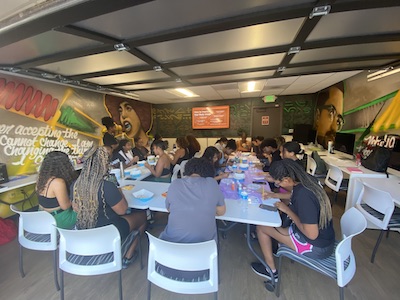
- Paint Talks
- Sister to Sister & Brother to Brother Luncheons
- Kwanzaa Celebration with the Afrikan Student Union
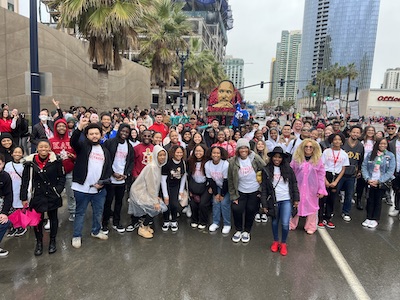
- Martin Luther King Jr. Parade
- Black History Month Programs
- Harambee Weekend
- Black Research Symposium
- Juneteenth - Freedom Day
BRC Academic Programs